


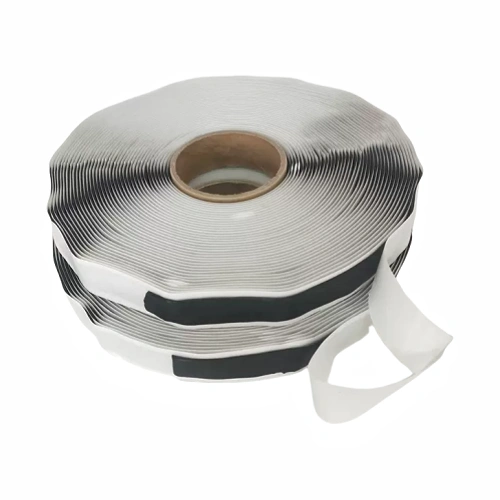
Foshan Opalus Adhesive Products Co., Ltd. manufactures china butyl sealant tape for concealed joints, overlap assemblies, compression-related sealing, and other industrial connections. The category includes double sided butyl rubber tape and butyl mastic tape, with each construction suited to different joint conditions rather than one universal use. Width, thickness, roll length, liner, substrate condition, and converting needs can be matched to the project before samples and repeat-production specifications are confirmed.

Choosing Between the Two Core Butyl Structures
This category is intended for internal or un-faced butyl joint sealing. Double sided butyl rubber tape is used where the sealing layer remains between stable mating surfaces, while butyl mastic tape offers greater conformability where gaps, irregular profiles, or compression become more important.
The distinction depends on how the joint is assembled rather than which product appears stronger. Foil-faced waterproofing tape, exposed flashing repair materials, and foam weatherstripping use different constructions and belong to separate product families.
Start With the Joint, Not the Thickness
Joint geometry is a better starting point than tape thickness. A concealed or controlled overlap joint needs continuous contact between the mating surfaces. An uneven interface may need a softer, more conformable mastic construction.
For a compression joint, available space and expected squeeze both matter. Thickness therefore needs to correspond to the actual joint gap and local surface irregularity. A thicker construction is not automatically better: excess material can interfere with fit-up, while too little may leave part of the intended gap unsupported.
Benefits
- Two core structures cover stable mating surfaces and more irregular compression-related joints.
- Width, thickness, liner, and roll format can be matched to the actual sealing interface.
- Actual substrate checks reduce selection risk on coated metal, unfamiliar plastics, and variable surfaces.
- Approved specifications provide a clearer reference for repeat production.
Which Butyl Sealant Tape Structure Fits the Joint Design?
For two mating surfaces with a controlled overlap or concealed interface, the double sided construction is usually the practical starting point because the sealing layer stays inside the assembled joint. A mastic construction becomes more useful where gaps vary, profiles are textured, or the material needs to conform under compression.
Available contact area, gap variation, surface condition, and assembly method all affect that decision. Selecting only by product name or nominal thickness can easily lead to the wrong construction. Different butyl constructions require different joint conditions. For a broader comparison of roofing, glazing, HVAC, panel, vehicle, and exposed sealing conditions, see our industrial uses for butyl tape before selecting the final construction. Confirm the final grade against the actual mating materials and installation conditions.
For concealed roof-panel seams, use the roof assembly drawing to confirm sealing-strip placement and fastening, then review the metal roof butyl tape installation guide for surface preparation and on-site inspection steps.
Surface Conditions That Change Product Selection
Metal, painted metal, glass, and compatible plastics are common substrates for industrial butyl sealant tape, but the material name alone does not establish compatibility.
Painted metal, for example, should not automatically be treated like bare metal. Coating condition, surface texture, dust, oil, moisture, release agents, and plastic formulation can all change adhesive contact. Representative samples are more useful when they use the actual surface finish and intended joint configuration instead of a generic test surface.
Dimensions, Liner, and Converting Considerations
Thickness relates to joint gap, expected compression, and local surface irregularity. Width relates to usable sealing contact area, so it should fit the mating surface rather than be selected only from a standard-size list.
Roll length influences handling and roll-change frequency. Release liner stiffness and liner release behavior can affect slitting, positioning, converting efficiency, and assembly handling. For non-standard formats, converting compatibility is worth checking before the construction is approved for production.

TDS / Technical Range
| Item | Typical Range / Customizable Value |
|---|---|
| Product Family | Double sided butyl rubber tape, butyl mastic tape, un-faced joint sealing formats |
| Base Material | Butyl rubber sealing compound, grade-dependent formulation |
| Seal Structure | Double sided interface sealing or conformable mastic sealing |
| Width | Standard and custom slit widths, selected according to available sealing contact area |
| Thickness | Grade-dependent, selected according to joint gap, expected compression, and surface profile |
| Roll Length | Standard and custom lengths for handling or converting needs |
| Color | Black, grey, white, or project-confirmed colors |
| Release Liner | Paper or film liner, construction-dependent; release behavior confirmed for converting and assembly needs |
| Converted Formats | Rolls, strips, slit rolls, and project-specific formats based on converting compatibility |
| Performance Review | Continuous seal, water ingress resistance, conformability, and adhesion by selected grade |
| Test Reference | Peel or sealing data linked to test substrate, conditioning, dwell, temperature, and agreed method |
| Quality Control | Dimensional consistency, liner condition, appearance, approved-sample comparison, batch consistency, and batch traceability |
| Customization | Width, thickness, length, color, liner, slitting, packaging, OEM / private label |
| Validation | Representative substrate, joint configuration, and approved sample validation |
For peel, shear, temperature and failure-mode definitions, review the butyl tape data sheet before comparing grades.
Continuous Seal and Water-Ingress Control
A butyl leak proof sealing tape still needs to be considered as part of the complete joint rather than as a universal waterproof solution. A continuous seal depends on reliable contact across the interface, including areas where surface profile or compression changes.
Water ingress resistance is meaningful only when the substrate and joint condition are also known. The same applies to technical data. A peel or sealing value should not be compared in isolation; test substrate, conditioning period, dwell, temperature, test method, and observed failure behavior provide the context needed to compare different grades.
Applications
- Concealed joints between metal, painted metal, glass, or compatible plastic components.
- Overlap and panel assemblies requiring a continuous internal butyl seal.
- Equipment and enclosure joints using butyl sealing rolls or strips in industrial assembly.
- HVAC, transport, fabrication, and general industrial assemblies where joint geometry affects selection.
- Custom converted sealing strips for repetitive assembly or project-specific dimensions.

From Custom Specification to Repeat Production
Once the joint and substrate conditions are understood, Foshan Opalus Adhesive Products Co., Ltd. can match the required dimensions, liner, slitting format, color, and converting method to the selected construction.
Non-standard formats are better controlled when an approved sample is paired with a written specification. For repeat production, the same construction, dimensional consistency, liner condition, appearance, approved sample, and agreed quality criteria provide a more reliable reference than simply requesting the “same tape.” This also makes batch-to-batch variation easier to identify and trace.
Information to Confirm Before Product Matching
Start with the substrate and coating condition, joint type, approximate gap, expected compression, and available contact area. Once the sealing structure is selected, roll dimensions, liner, converting requirements, application environment, and estimated volume can be confirmed.
For projects with longer inventory cycles, the selected grade’s storage condition and shelf-life reference should also be checked before repeat purchasing. MOQ may vary when special width, thickness, liner, color, slitting, packaging, or private-label work is involved.
What Should Be Checked Before Matching Butyl Sealant Tape to a Substrate?
The actual surface matters more than a generic material label. Painted metal, galvanized surfaces, glass, and compatible plastics can behave differently even when they appear similar at first inspection.
A useful sample should represent the intended substrate, joint geometry, compression, and service environment. Technical documents also need context: test method, substrate, conditioning time, dwell, temperature, and failure observation should be considered together before results from different grades are treated as directly comparable.
FAQ
How do I choose between double sided butyl rubber tape and butyl mastic tape?
Choose the double sided structure for stable mating surfaces and concealed interfaces. Consider the mastic option when uneven profiles, variable gaps, or conformability under compression are the main concerns.
Which specifications should be confirmed before requesting a butyl sealant tape sample?
Confirm the substrate, joint type, available contact width, thickness or approximate joint gap, roll length, liner, application conditions, converting method, and expected quantity.
What technical information should be reviewed when comparing butyl sealant tape performance?
Review the reported result together with the test substrate, conditioning or dwell period, temperature, test method, and failure behavior. Values from different grades should not be treated as directly comparable when these conditions differ.
Does MOQ change for customized butyl sealant tape?
Yes. MOQ may change for special width, thickness, color, liner, slitting, packaging, or private-label specifications and should be confirmed after the required construction and sample conditions are defined.