Introduction
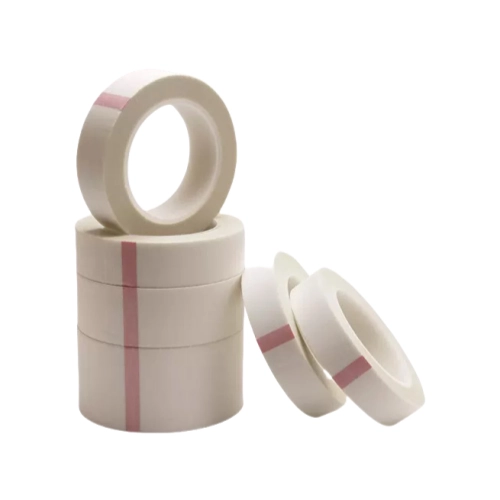
Glass cloth adhesive tape combines a woven fiberglass backing with a pressure-sensitive or thermosetting adhesive system. The backing contributes tensile strength, abrasion resistance, and dimensional stability; the adhesive determines bonding, heat ageing, solvent or varnish interaction, and removal behavior. This article should function as a broad selection guide: it compares the main construction variables and helps readers decide when to move to an electrical-insulation grade, a production-wrapping grade, or a masking construction.

What is Glass Cloth Adhesive Tape and Its Primary Uses?
Understanding Glass Cloth Adhesive Tape
The common element is the woven fiberglass backing. Product families should be separated mainly by adhesive system, backing weight or thickness, liner and converting format, and intended use – not by color alone. Silicone, acrylic, and thermosetting rubber systems can behave differently under heat, dwell, solvent or varnish exposure, and removal. The exact temperature, dielectric, flame, and chemical-resistance claims must come from the supplied grade and its approved test data. Use the glass cloth tape selection range to compare the available electrical, masking and production-wrapping directions.
Glass cloth adhesive tape is commonly used in:
- Electrical Insulation: Provides reliable insulation for high-temperature electrical applications.
- Abrasive Protection: Protects surfaces from wear and tear in harsh environments.
- Bundling and Harnessing: Secures and organizes wires and cables.
- Flame Retardant Applications: Ensures safety in environments prone to fire hazards.

Benefits of Glass Cloth Tape
- Woven fiberglass backing can provide mechanical reinforcement, tear resistance, and dimensional stability during wrapping or handling.
- Abrasion resistance is useful where the tape contacts component edges or repeated handling points.
- Adhesive chemistry can be selected around heat ageing, bonding, varnish or solvent exposure, and removal requirements.
- Electrical-insulation use is possible only when the specific grade has suitable dielectric and system-level qualification data.
- High-temperature performance is grade specific and should be evaluated from the full construction, not from the fiberglass backing alone.
- Slitting, roll length, core, liner, and converted format can be matched to the production process when supported by the supplier.
Installation and Application
- Surface Preparation: Remove dust, oil, loose coating, release agents, and other contamination that can interfere with adhesive wet-out.
- Tape Application: Apply the tape with controlled tension and firm pressure appropriate to the component geometry.
- Overlap Design: Set overlap from the electrical or process design; do not use a universal overlap dimension copied from another application.
- Final Checks: Inspect edge fray, wrinkles, lifting, build-up, and contact around bends or crossover points, then validate the sample under the intended heat or process cycle.
Different Types of Glass Cloth Adhesive Tape
Silicone Adhesive Glass Cloth Tape
Use this family when a fiberglass backing is required together with an adhesive system qualified for elevated-temperature electrical insulation, masking, or process protection. The usable temperature, residue behavior, dielectric properties, and chemical exposure limits must come from the specific TDS.
Acrylic Adhesive Glass Cloth Tape
Acrylic grades can suit applications where stable converting, balanced adhesion, and a different ageing profile are more important than the highest-temperature silicone construction. Confirm the substrate, dwell, process temperature, and removal target.
Thermosetting Rubber Adhesive Glass Cloth Tape
These constructions can be evaluated where strong holding force and post-heat bonding are part of the requirement. Compatibility with varnish, resin, solvents, and the electrical system should be verified on a representative sample.
Electrical Insulation Grades
For motors, transformers, coils, leads, crossover insulation, and reinforced cable sections, move to Glass Cloth Insulation Tape for product-level electrical data.
High-Strength Long-Roll Grades
When low stretch, edge strength, mechanical reinforcement, and fewer roll changes matter in repeated production wrapping, compare High Temperature High Strength Fiberglass Cloth Electrical Tape and verify the actual roll, thickness, adhesive, and exposure specification.

Application Decision Examples
- Electrical insulation: prioritize verified dielectric data, adhesive grade, thermal ageing, wrap geometry, varnish or resin compatibility, and the complete insulation system.
- High-temperature masking: prioritize actual tape-surface temperature, duration, substrate, clean-removal target, and downstream coating or thermal process.
- Harnessing and mechanical protection: prioritize backing strength, abrasion, edge condition, flexibility, overlap, and the temperature range verified for the exact grade.
- Production wrapping: prioritize roll length, slit width, core, unwind, low stretch, edge fraying, and repeatability during manual or semi-automatic wrapping.
- These are selection examples rather than universal industry claims; each project should be confirmed with the supplied grade and representative sample.